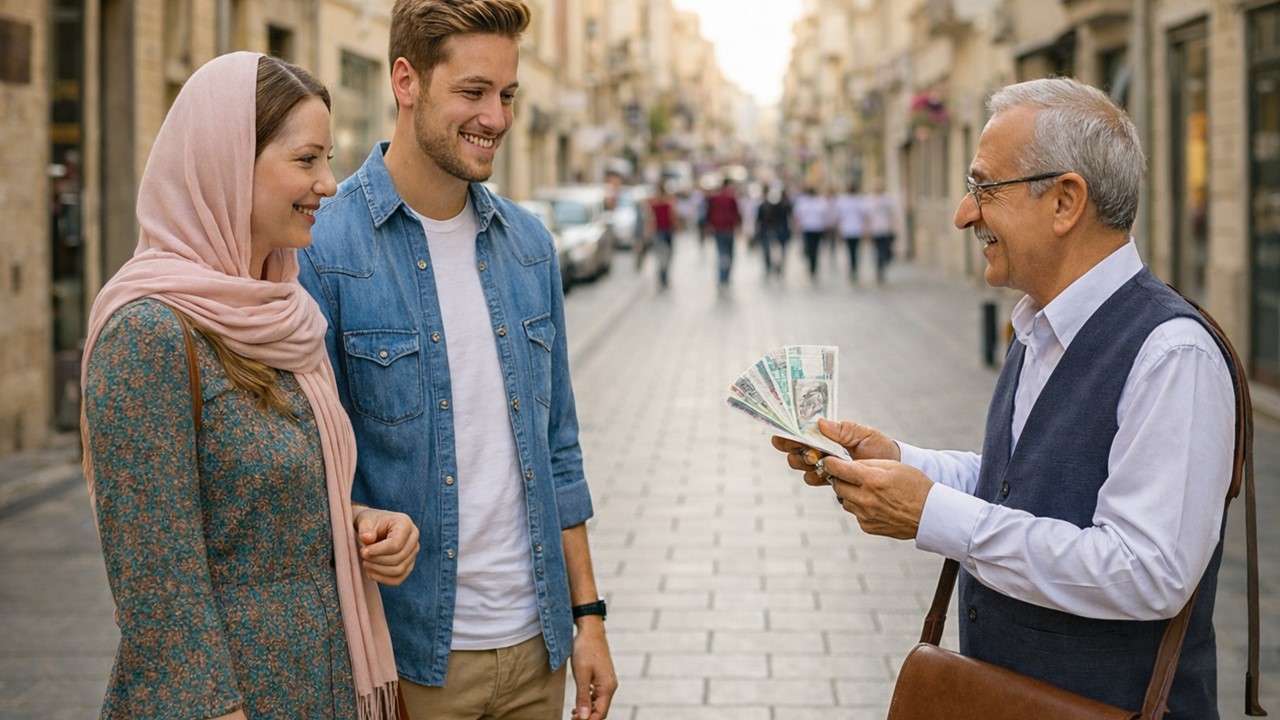
Money in Iran works differently from many countries.
Understanding Iranian currency, exchange rates, and payment methods helps tourists travel confidently and avoid costly mistakes.
This guide explains money in Iran, how exchange rates work, and how tourists pay safely and easily.
Understanding Currency in Iran
What Is the Official Currency of Iran?
While the Iranian Rial (IRR) is the official currency used on banknotes and government documents, don’t expect to hear the word often on the street. In daily life, Iranians use a different system that can be confusing for first-time visitors: the Toman.
Iranian Rial vs Toman: Explained Simply
To navigate Iran like a local, you need to master the “Toman.” Think of the Toman as the spoken version of the Rial, created by simply dropping one zero. For example, if a taxi driver asks for “50,000 Toman,” you are actually paying 500,000 Rials. It may feel like a math test at first, but remembering that 1,000 Toman = 10,000 Rials will save you a lot of confusion at the checkout counter.
Why Do Iranians Use Toman?
If you look at an Iranian banknote, you’ll notice a lot of zeros—a side effect of long-term inflation. To make life easier, locals use the Toman as a conversational shorthand.
By effectively “removing” zeros, the Toman turns long, complicated numbers into manageable figures for everyday shopping. It’s much simpler to say “50,000” than “half a million.”
💡 Expert Tip: How to Read Prices as a Tourist? To avoid overpaying, always double-check with the vendor: “Toman or Rial?“ It’s a simple question that every traveler should keep in their back pocket. If unsure, ask them to write the number on paper or a calculator.
Exchange Rates in Iran
Understanding the Iranian currency market requires a bit of research before you arrive, as the country operates on a multi-tier exchange system.
Official Rate vs. Market Rate
Iran maintains two distinct exchange rates:
- The Official Rate: Reserved exclusively for government institutions and specific state-funded imports.
- The Market Rate (Free Market): This is the rate you will use. It is higher than the official rate, meaning your foreign currency will have much more purchasing power.
Important Note for Travelers: Exchange rates in Iran are highly volatile and can fluctuate daily—or even hourly—based on supply, demand, and economic conditions. Do not rely on Google for current rates; the price shown on Google is typically not-updated. To get the real rate, always consult a trusted local contact or visit an authorized exchange shop (Sarrafi) for the most accurate information.
How to Pay in Iran?
The most critical piece of advice for any traveler is this: Iran is a cash-based economy for tourists.
Can Tourists Use Credit or Debit Cards in Iran?
Cash Is King in Iran! Due to international banking sanctions, the Iranian financial system is disconnected from global networks. This means:
- Visa, Mastercard, and American Express are not accepted anywhere.
- Foreign ATM cards will not work in Iranian machines.
- Even luxury hotels cannot process foreign cards.
- A very small number of businesses—such as high-end carpet shops or specialized travel agencies—may have the unique capability to process international transactions and accept foreign cards. However, these are rare exceptions and cannot be found in most places.
So, carrying enough cash is essential.
Exchanging Money in Iran
Where Are The Best Places to Exchange Money In Iran?
The best places to exchange money are:
- Official exchange offices
- Licensed currency shops in city centers
- Some hotels with exchange services
Avoid street money changers.
Where Should You Change Your Money?
When you travel to Iran, you have two main choices for exchanging currency:
- At the Airport: These offices are very convenient because you can get local money as soon as you land. However, their exchange rates are usually lower.
- In the City: Exchange offices in the city center usually offer much better rates. You will get more value for your money here.
💡 Travel Tip: Most smart travelers exchange a small amount of money at the airport to pay for a taxi or hotel. Then, they exchange the rest of their money at a city office to get a better deal.
What Currencies Are Accepted in Iran?
The most accepted foreign currencies are:
- Euro (EUR)
- US Dollar (USD)
Always try to bring new banknotes. They often have higher value. Avoid bringing damaged or old money. Most offices will reject them, and you won’t be able to change your money.
Avoiding Scams and Bad Rates:
- Always count your money carefully.
- Check the rate before exchanging.
- Use reputable exchange offices with digital rate boards.
- If a deal sounds too good, avoid it.
How Much Does it Cost to Travel in Iran?
Many tourists find Iran very affordable. While costs can vary between a big city like Tehran and smaller villages, here is a quick guide to spending styles:
- The Budget Way: Focus on cheap food and transport. You can easily manage with €20–€30 per day.
- The Comfortable Way: Mid-range travelers enjoy comfortable hotels and tours. Expect to spend between €40 and €70 per day.
- The Luxury Way: Enjoy the highest level of Persian hospitality with private services. Prices usually start from €100 and go up.
No matter your style, All travelers benefit from Iran’s value.
Emergency Cash Planning
- Bring extra cash for emergencies.
- ATMs cannot dispense money to tourists.
- Splitting cash between bags increases safety.
This reduces stress during travel.
Paying for Hotels, Transport, and Shopping in Iran
Most hotels usually accept cash payments. Some of them may ask you to pay in Euros or Dollars. It is a good idea to confirm the payment method when you book your room. Pre-booking your stay helps you avoid any unexpected problems or surprises.
Taxis, Apps, and Public Transport
You should pay for taxis in cash. If you use ride-hailing apps like Snapp, you can also choose to pay the driver with cash. Generally, public transport costs in Iran are very low and affordable. It is always useful to carry small banknotes for these payments.
Restaurants, Bazaars, and Souvenirs
Most restaurants only accept cash payments. In bazaars, you should also expect to pay with cash and sometimes you can bargain to get a fair price. It is a good idea to always agree on the price before you buy any souvenirs. Remember that polite negotiation is a normal part of the local culture.
Tourist Cards and Alternative Payment Solutions
Iranian Tourist Debit Cards Since international credit cards do not work in Iran, some local companies offer specialized Iranian tourist cards. These are prepaid local debit cards designed specifically for travelers.
To use them, tourists simply load the card with Euros or Dollars, which are then converted into the local currency. These cards are very convenient because they are accepted where Iranian cards work. They work in many shops, restaurants, and hotels across the country.
How They Work and Where to Get Them?
Tourist cards are issued through travel agencies. If you would like to get one of these tourist debit cards, please let us know. We can help you with the application and make your travel easier.
Pros and Cons of Tourist Card in Iran for Travelers:
Pros:
- Reduced cash handling
- Easier hotel payments
Cons:
- Service fees
- Not available everywhere
Cash remains the safest option.
Practical Money Tips for Tourists in Iran
Carrying Cash Safely When traveling with cash, it is a good idea to use a money belt or a secure pouch to keep your bills safe. Try not to show large amounts of money in public places. Also, most hotels provide safes where you can keep your extra cash and valuables. While Iran is a very safe country, being cautious is always a wise choice.
Handling Large Banknotes
In Iran, it is very common to use large banknotes. However, you might find that some small shops do not have enough change for them. To make things easier, try to carry smaller notes for paying taxi fares. This simple habit saves your time and helps you avoid any confusion during your daily activities.
Cultural Tips When Paying
When you want to pay, you might experience Ta’arof. This is a Persian tradition where a shopkeeper or driver may politely refuse your payment at first. Don’t worry; this is just a cultural gesture, and the service is not actually free.
The best way to handle this is to offer the payment again politely until they accept it. Understanding Ta’arof is important because it helps you avoid embarrassment and act like a local.
Common Money Mistakes Tourists Make
- Confusing Rial and Toman: Mixing up Rial and Toman is the most common mistake for travelers in Iran. To avoid errors, always clarify which unit the person is using. If you are unsure, ask for the price in writing (on paper or a calculator) to be 100% certain.
- Exchanging Money Too Early: Exchange rates may improve after you arrive and reach the city center. Instead of changing everything at once, exchange a small amount at first and then monitor the rates in the city. Usually, having a little patience pays off and gives you a better deal.
- Not Carrying Enough Cash: Remember that international bank cards do not work here, so tourists cannot withdraw money from local ATMs. Running out of cash can cause serious problems during your trip. You must plan carefully and bring enough physical cash before entering Iran. Proper preparation ensures peace of mind and a stress-free journey.
Is Iran Expensive or Cheap for Tourists?
Cost Comparison with Other Countries:
Iran is much cheaper than most European countries. You will find that food, transport, and entry tickets for attractions are very affordable. Additionally, accommodation offers excellent value, meaning you get a great room for a low price. Many travelers are pleasantly surprised by how little they spend.
What Is Surprisingly Affordable?
- Dining Out: Restaurant meals are very inexpensive. You can enjoy a full traditional dinner for a small price.
- Travel: Intercity travel (like buses or trains) is both cheap and comfortable.
- Culture: Most cultural and historical sites cost only a few Euros to enter. The quality of food and service in Iran often exceeds expectations.
Where Tourists Spend the Most?
While the basics are cheap, you might spend more on private tours or specialized guides. Luxury hotels are limited and can be pricey compared to other local options. Also, the price of souvenirs varies depending on the craftsmanship (how they are made). However, even luxury experiences in Iran feel very reasonable compared to global prices.
Conclusion: Enjoy Your Trip to Iran Without Financial Stress
Managing your money in Iran may seem complicated at first because of the different currency units and the cash-only system. However, with a little preparation, it becomes very easy.
By understanding the difference between Rial and Toman, carrying enough clean banknotes, and using local exchange offices, you can enjoy one of the most affordable and beautiful destinations in the world. Iran offers incredible value, friendly people, and a rich culture that will make every Euro you spend worth it.
Final Tip: Remember to plan your budget ahead of time and always keep some small bills in your pocket for daily needs.