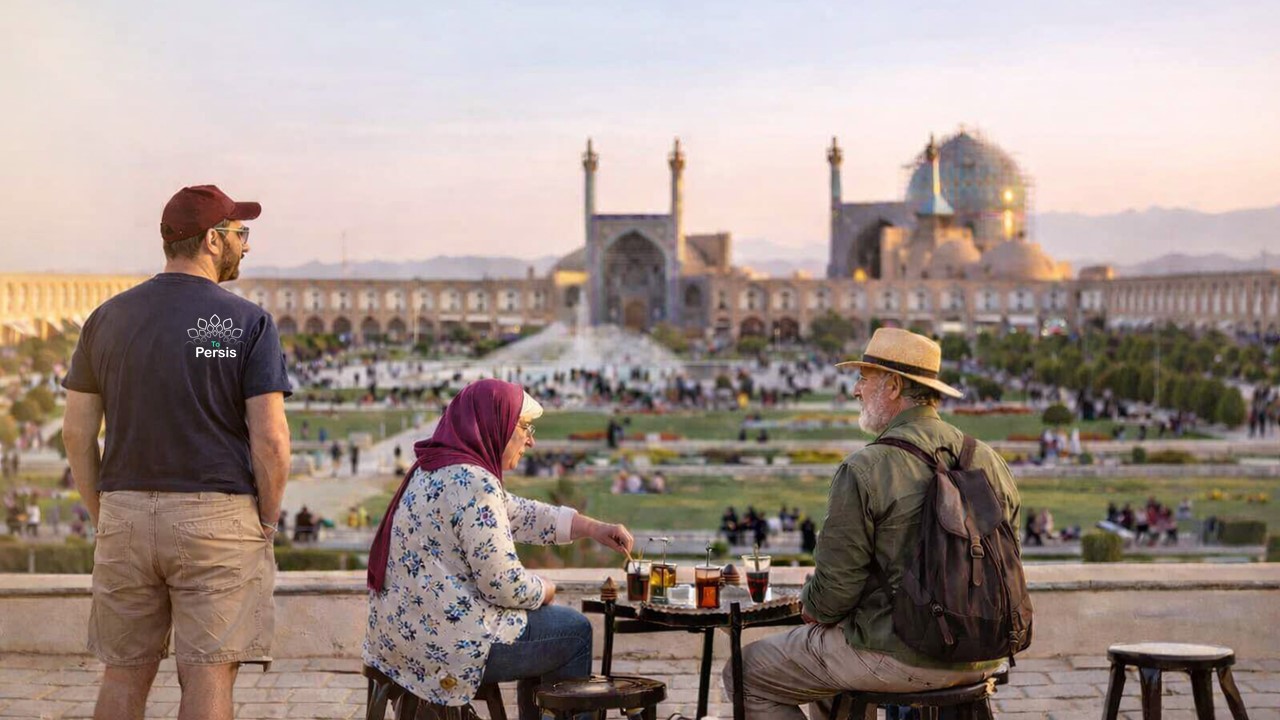
Naqshe Jahan Square in Isfahan is one of the most breathtaking UNESCO World Heritage sites in Iran. It is also considered the second-largest historical square in the world, covering more than 90,000 square meters. This Safavid-era masterpiece blends Persian architecture, royal palaces, grand mosques, and a lively bazaar into one harmonious space. Located in the heart of Isfahan, Naqsh-e Jahan Square reflects the golden age of the Safavid dynasty and remains one of the most impressive urban squares on earth.
If you want to understand why Isfahan is called “Half of the World,” this is where your journey begins.
Introduction to Naqshe Jahan Square
Imagine standing in a square so vast that it feels like a royal stage beneath an endless sky. Turquoise domes shine in the sunlight, and intricate tiles reflect changing shades of blue and gold. Horse-drawn carriages move slowly across the wide open space. Families sit on the grass, children run freely, and the atmosphere feels both grand and warmly alive.
Naqshe Jahan Square was built in the early 17th century by Shah Abbas I. It was designed to display the power, religion, trade, and culture of the Safavid Empire. Today, it remains one of the largest city squares in the world.
In 1979, it was inscribed as a UNESCO World Heritage Site, recognized for its architectural unity and historical importance.
The History of Naqshe Jahan Square
The Vision of Shah Abbas I
When Shah Abbas I moved the capital to Isfahan in 1598, he wanted to build a city that showed the glory, power, and artistic brilliance of the Safavid Empire. Naqshe Jahan Square became the centerpiece of that grand vision.
The name “Naqsh-e Jahan” means “Image of the World.” The square symbolized the Safavid worldview: religion, government, and commerce living side by side.
From Polo Field to Royal Showcase
The square served as the social, political, and economic heart of Isfahan. One of its main functions was as a royal polo field, and the original stone goalposts still stand today. It also hosted state ceremonies, military parades, and public celebrations.
Four iconic monuments stand on each side of the square. They are connected by a continuous series of elegant two-story arcades. The layout was carefully planned. Each structure reflected a pillar of Safavid power:
• The Shah Mosque and Sheikh Lotfollah Mosque represented official state religion
• Ali Qapu functioned as a ceremonial gateway and royal pavilion
• The Grand Bazaar symbolized commerce and economic strength
• It was urban planning centuries ahead of its time.
Architectural Masterpieces Around the Square
Shah Mosque (Abbasi Jameh Mosque)
Standing on the southern side, the Shah Mosque is a masterpiece of Persian architecture in Safavid era. It was built by the order of Shah Abbas I to display the elegance and grandeur of Persian art and architecture.
Its entrance portal towers over visitors. The blue and turquoise tiles form intricate floral and geometric patterns. Step inside, and you notice something remarkable: the mosque is angled slightly toward Mecca, even though the square is not.
Clap your hands under the dome, and you will hear the perfect echo. This acoustic precision reflects Safavid engineering genius in 400 years ago.
Photography tip: Visit in late afternoon when the tiles glow golden.
Sheikh Lotfollah Mosque
Unlike the Shah Mosque, Sheikh Lotfollah Mosque has no minarets and no courtyard. It was the first mosque built on Naqshe Jahan Square and served as a symbol of Safavid architectural innovation.
Its cream-colored dome changes color throughout the day, and inside, the peacock-shaped light effect near the dome’s center is unforgettable. The mosque feels intimate and poetic, showcasing the ingenuity of Safavid architects, especially in the use of natural light to enhance patterns and create a serene atmosphere. Every detail, from the delicate tilework to the precise geometry of the dome, reflects refined Persian artistry at its finest.
Ali Qapu Palace
On the western side stands Ali Qapu Palace, the royal gateway to the Safavid court.
Climb and step onto the balcony where Safavid Kings used to watch polo matches below. The view still feels royal.
The sixth floor, also known as the Music Hall, features stucco niches shaped like musical instruments. These niches were carefully designed to serve as elegant decorative elements.
Expert tip: The climb involves many stairs, but the balcony view is worth every step. Photographers should not miss this spot.
Qeysariyeh Gate and Grand Bazaar of Isfahan
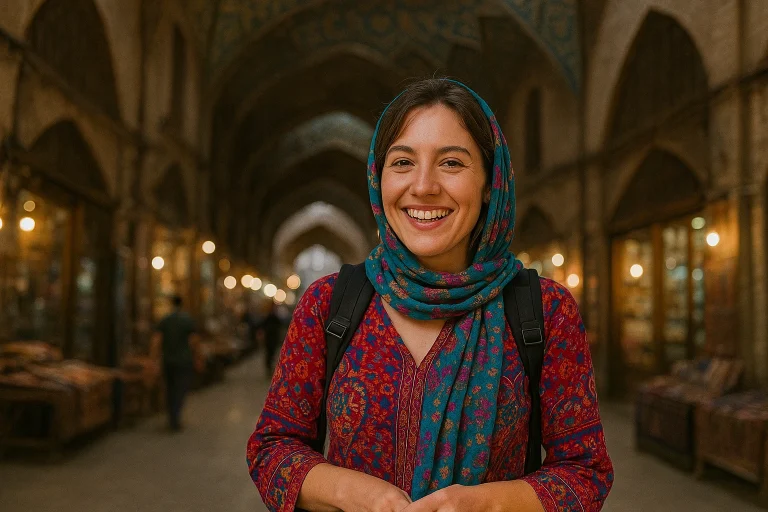
Stretching from the northern side of the square, where the Qeysariyeh Gate stands, the Grand Bazaar of Isfahan connects the old and new parts of the city and is one of the longest bazaars in the world. Built during Shah Abbas I’s reign, the gate is a fine example of Safavid Persian architecture, with stunning paintings and decorative tilework that welcome visitors into the vibrant market.
Inside the bazaar, you will find:
• Persian carpets
• Block-printed fabrics (Qalamkari)
• Traditional jewelry, especially silver
• Miniature paintings
• Hand-painted tiles
• Copperware
• Khatam marquetry
The bazaar is not just a market, it is a living museum where centuries of craftsmanship and commerce continue to thrive.
Expert tip: Don’t miss Qeysariyeh Café, located atop the gate, offering a breathtaking view of the square. It is one of the best spots for photography.
Things to Do in Naqshe Jahan Square
Take a Horse Carriage Ride
A slow carriage ride around the square feels like stepping into a historical painting.
Enjoy Sunset
Locals gather on the grass at sunset. Families picnic. Children play football. The atmosphere feels warm and welcoming.
Try Traditional Ice Cream and deserts
While exploring the square, treat yourself to traditional saffron ice cream, a cool glass of Doogh (yogurt drink), and Gooshfil, the famous sweet pastry often enjoyed together with the yogurt drink in Isfahan.
Café Hopping
- Stop at Azadegan (Haj Mirza) Café, famous for its artistic interior and traditional dishes. It feels like dining inside a Persian art gallery.
- Another special café is Qeysariyeh, located on the northern side of the square. It offers stunning views of the square, making it an excellent spot for photography, particularly at sunset and in the evening.
Reserve a One-Day Handicraft Workshop Tour with to Persis
Participate in a special local experience where skilled artisans demonstrate traditional techniques in different workshops around the square. Try the crafts yourself and learn the cultural significance behind each art form, gaining a hands-on understanding of Persian artistry and heritage.
Take a look at all of the To Persis one-day private tours.
Cycle Through the Historic Alleys Around the Square
Rent a bicycle or scooter near the square and explore the historic neighborhoods surrounding Naqshe Jahan Square. For a more immersive experience, reserve a private one-day bicycle or scooter tour with To Persis and discover hidden corners of the city beyond the usual tourist paths.
Reserve a One-Day Photography Tour with To Persis in the Square
Take our comprehensive photography tour in Naqshe Jahan Square and enjoy capturing the beauty of its monuments. On this guided tour, you will walk through the best locations around the square, discover unique angles, and learn how to frame your shots like a professional. The team also helps take stunning photos of travelers in iconic spots, so you can have lasting memories of your visit.
Explore Traditional Bazaars
Explore the traditional shops surrounding the square as well as the Grand Bazaar on its northern side. Walk through historic arcades, watch artisans at work, and browse traditional crafts such as carpets, copperware, and miniature paintings. It is the perfect place to experience Isfahan’s commercial heritage and buy memorable souvenirs.
Watch Evening Illumination
At night, the mosques light up. The reflection on the tiles creates a magical glow and the whole square takes on a completely different atmosphere that is not to be missed.
Best Restaurants Near Naqshe Jahan Square
- Namakdan Mansion: A beautifully restored historic house serving traditional Iranian dishes in an elegant, atmospheric setting. Perfect for those who want to combine history with fine dining.
- Signature Restaurant: Known for its modern twist on Persian cuisine, attentive service, and comfortable ambiance. Ideal for families or travelers seeking contemporary dining with a great view of the square.
- Bagh Homayoun: Set in a garden-style restaurant, it offers a peaceful retreat with classic Persian kebabs and stews. The lush surroundings make it a favorite for a relaxed meal.
- Naqshe Jahan Restaurant: Located close to the square, it specializes in traditional Isfahani dishes, including Beryani and saffron rice, offering an authentic local dining experience.
- Bastani Restaurant – A local favorite for traditional Persian ice cream and desserts. Its charming interior and classic flavors make it a perfect stop for a sweet treat while exploring Naqshe Jahan Square.
Best Hotels Near the Square
- Abbasi Hotel: One of Isfahan’s most iconic historic hotels, originally a Safavid caravanserai. It features traditional Persian architecture with stunning courtyards and beautifully tiled interiors, offering a unique historic ambiance.
- Mojalal Chaharbagh Hotel : A modern 5-star hotel located near Chaharbagh Street, combining comfort with easy access to major attractions. Its rooftop terrace provides panoramic views of the city, perfect for relaxing after a day of sightseeing.
- Karbat Hotel : A contemporary 3-star hotel close to Naqshe Jahan Square, known for its attentive service and cozy interiors. It is ideal for travelers seeking a quiet retreat within walking distance of the city’s main attractions.
Boutique Guesthouses
Many traditional houses near the square offer charming stays at lower prices.
like: Keryas, Isfahan Traditional Hotel, Ghasre Monshi, Mahour, Dalan Jahan, Shahsavaran, …
Booking tip: Choose accommodation within walking distance to experience the square at night.
When Is The Best Time to Visit Naqshe Jahan Square?
- Spring (March–May): Mild weather and blooming gardens. Ideal season.
- Autumn (September–November): Cool air and fewer tourists.
- Tip: Summer afternoons can be very hot. Visit early morning or sunset during warm months.
Practical Travel Tips For Visiting Naqshe Jahan Square
- Dress modestly. Women need a headscarf specially inside the Mosques.
- Mosques close during prayer times.
- Devote at least half a day to exploration.
- Wear comfortable shoes. The square is large.
- Photography is allowed but avoid flash inside mosques.
Why Naqshe Jahan Square Is a UNESCO Treasure?
UNESCO recognizes the square for its outstanding universal value. It represents a peak of Safavid urban planning and Persian art.
The harmony between architecture and open space makes it unique. Few places in the world combine political, religious, and commercial life so elegantly.
You can explore more details through UNESCO and cultural heritage documentation:
https://whc.unesco.org/en/list/115/
conclusion
Naqshe Jahan Square is more than a historical site. It is the living heart of Isfahan. It blends architecture, culture, food, and daily life into one unforgettable experience.
Walk slowly. Look up at the domes. Listen to the echoes. Feel the rhythm of history beneath your feet.
In Naqshe Jahan Square, the “Image of the World” still feels alive.
Frequently Asked Questions (FAQs) About Naqshe Jahan Square
1. Why is Naqshe Jahan Square famous?
It is one of the largest historic squares in the world and a UNESCO site.
2. Is Naqshe Jahan Square the same as Imam Square?
Yes. Imam Square is its second name.
3. How old is Naqshe Jahan Square?
It dates back to the early 17th century.
4. How much time do you need to visit?
At least 3–4 hours for a full experience.
5. Is there an entrance fee?
The square is free. Individual monuments have tickets.
6. What is the best time of day to visit?
Sunset offers the most beautiful light.
7. Can you visit at night?
Yes. The square remains lively in the evening.
8. What can you buy in the bazaar?
Carpets, copperware, miniatures, and handicrafts.
9. Is it family-friendly?
Yes. Families often picnic on the grass.
10. What is the architectural style?
Safavid Persian architecture.
11. Who built Naqshe Jahan Square?
Shah Abbas I of the Safavid dynasty.
12. Is it close to other attractions?
Yes. Si-o-se-pol Bridge and Chehel Sotoun Palace are nearby.