Iran holds one of the richest artistic traditions in the world. Many travelers leave the country with more than memories. They bring home objects shaped by centuries of creativity, patience, and cultural pride. This guide helps you understand the finest Iranian handicrafts and where to buy them. You will learn what makes each craft special, how to choose authentic pieces, and which cities offer the best shopping experience.
Why Iranian Handicrafts Are Globally Admired?
* Centuries of craftsmanship
Iranian artisans have protected their craft for many generations. Every piece reflects a slow and careful process. Many techniques used today remain unchanged since ancient Persia.
* Natural materials and traditional techniques
Most crafts use local materials like wool, clay, copper, and walnut wood. Every item shows a deep respect for nature and heritage.
* Regional styles across provinces
Each province offers a unique identity. From the carpets of Tabriz to the turquoise of Neyshabur, every region tells its own story.
Top Iranian Handicrafts You Should Not Miss
1. Persian Carpets
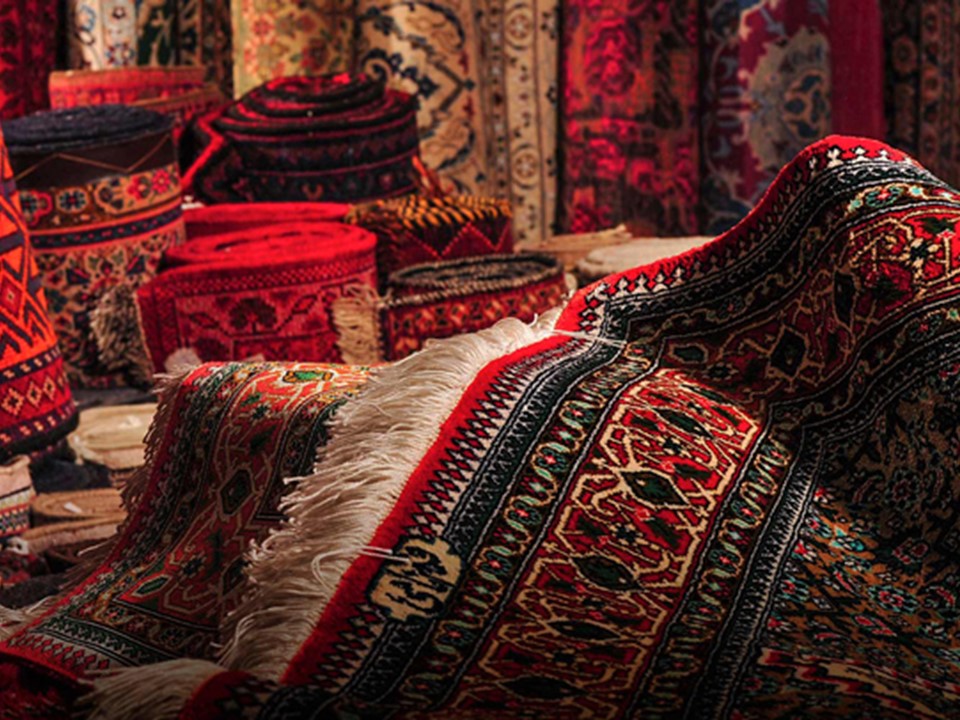
Persian carpets remain the most famous Iranian craft. They use wool, silk, or cotton threads. Each knot is tied by hand. City carpets show fine detail, while tribal carpets offer bold patterns.
Best regions: Isfahan, Tabriz, Kashan, Qom.
For a deeper look, don’t miss our dedicated article on Persian Carpet.
2. Kilim and Gabbeh Rugs
Kilim rugs are flatwoven and light. They work well in modern homes. Gabbeh rugs come from tribal areas. They show simple patterns with warm colors.
Best regions: Shiraz, Kerman, Tabriz.
3. Minakari (Enamel Work)
Minakari uses metal plates covered with colorful enamel. Artisans paint delicate floral patterns with tiny brushes. The result looks bright and elegant.
Best city: Isfahan.
4. Khatamkari (Wood Inlay Art)
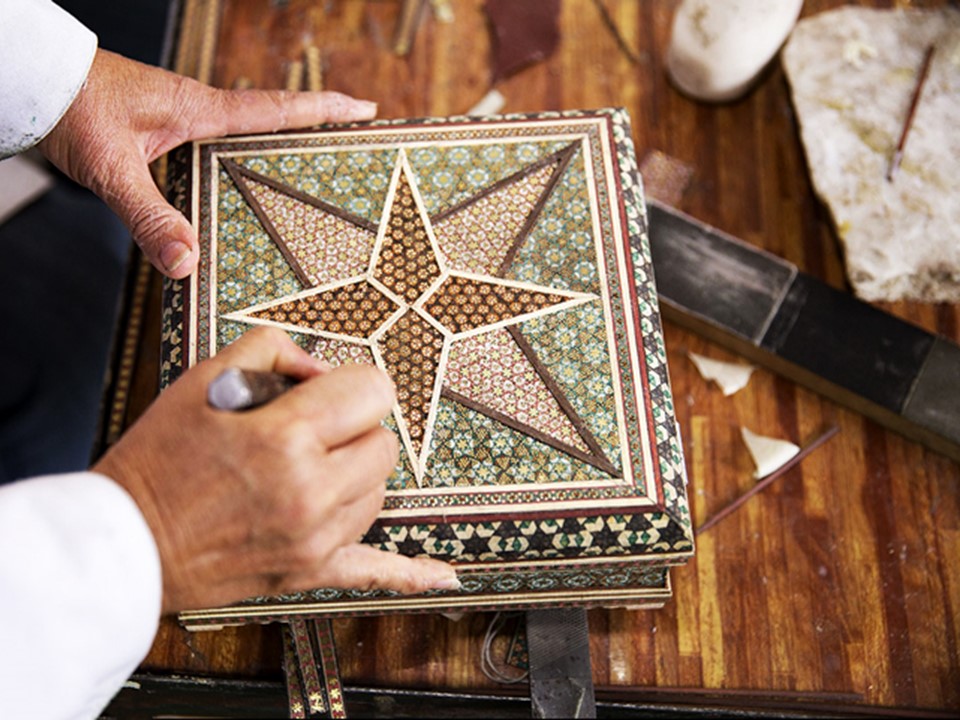
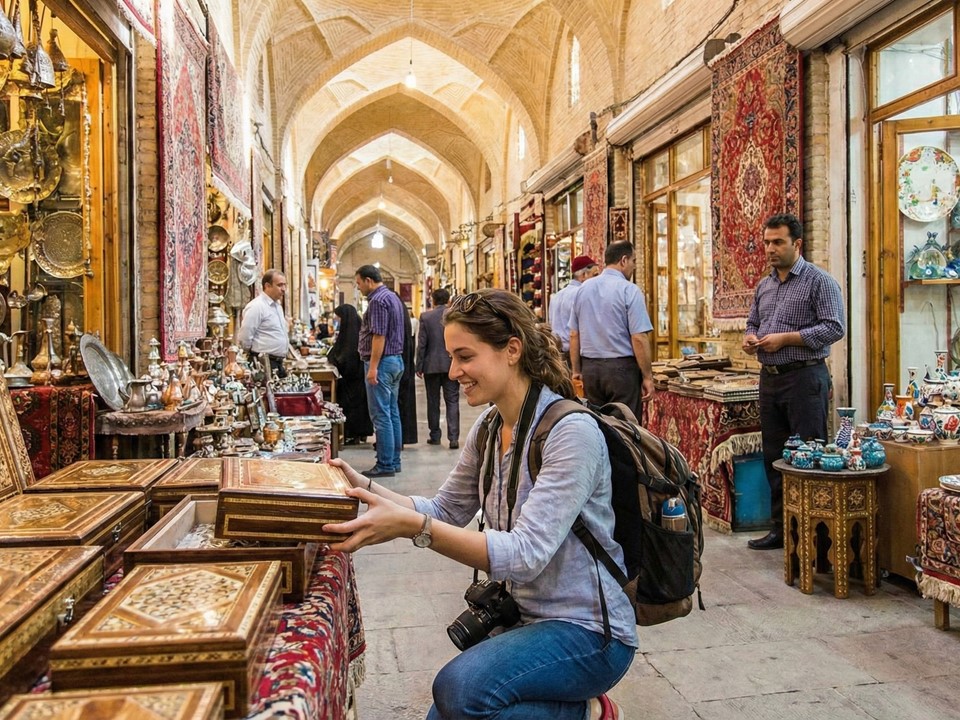
Khatamkari is one of Iran’s most detailed crafts. Craftsmen use wood, bone, and metal wires. They create geometric patterns with great precision. Common items include jewelry boxes, chessboards, and picture frames.
Best city: Shiraz and Isfahan.
5. Ghalamzani (Metal Engraving)
Ghalamzani artists engrave copper, silver, or brass plates by hand. Every stroke forms a detailed pattern. Many plates show scenes from Persian poetry or mythology.
Best cities: Isfahan and Shiraz.
6. Persian Ceramics and Pottery
You will see blue-and-white pottery across Iran. These colors show a strong connection to Persian architecture. Many designs include flowers and arabesque motifs.
Best regions: Kashan, Lalejin, Meybod.
7. Turquoise (Firoozeh) Work
Iran offers some of the world’s best turquoise. Neyshabur mines produce stones with a strong sky-blue color. Many shops combine turquoise with copper or silver.
Best cities: Neyshabur and Mashhad.
8. Handwoven Textiles
Iran offers beautiful handwoven textiles like termeh. Termeh shawls include silk threads and traditional paisley patterns. These fabrics carry deep cultural symbolism.
Best city: Yazd.
9. Qalamkar (Block-Printed Fabrics)
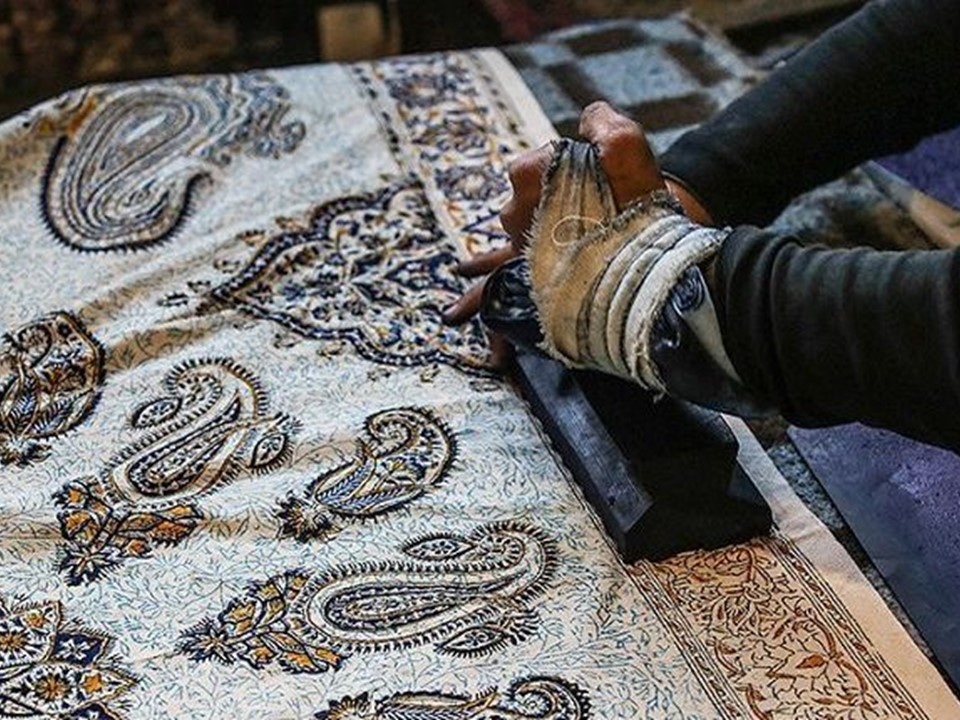
Qalamkar artisans use carved wooden blocks to print patterns on cotton. Every print needs careful alignment. The result shows warm natural colors and soft patterns.
Best city: Isfahan.
10. Traditional Jewelry
Iranian jewelry includes silver pieces with tribal designs. Many come from northwestern cities. You will also find traditional turquoise rings and pendants.
Best regions: Tabriz, Mashhad.
Where to Buy Iranian Handicrafts (City-by-City Guide)
Tehran
Tehran offers the widest range of products.
Best places:
- Grand Bazaar
- Tajrish Bazaar
- Museum shops around Sa’dabad or Niavaran
These areas offer fair prices and quality assurance.
Isfahan
Many travelers call Isfahan the heart of Iranian handicrafts.
Best places:
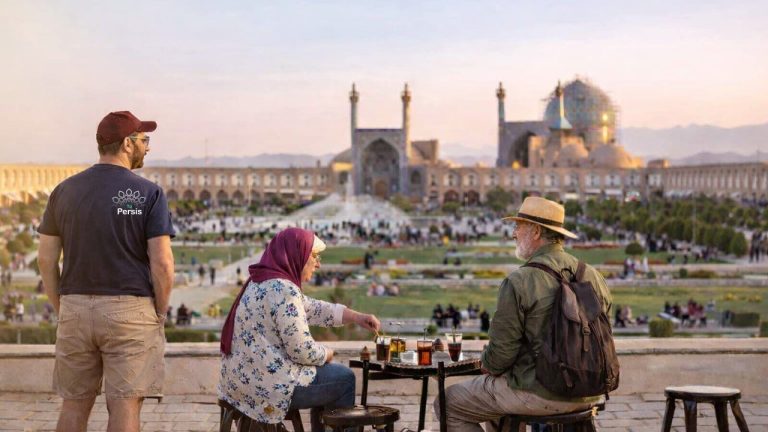
- Naqsh-e Jahan Square
- Jolfa district
This city is perfect for Minakari, Khatamkari, Ghalamzani, and Qalamkar.
Shiraz
Shiraz offers a rich mix of carpets, inlaid wood, and antiques.
Best place: Vakil Bazaar
You can find high-quality woodwork and jewelry here.
Yazd
Yazd is the center of handwoven textiles and traditional clothing.
Best places:
- Old city bazaars
- Zoroastrian craft shops
Tabriz
Tabriz is famous for carpets and silver jewelry.
Best place: Tabriz Historic Bazaar (UNESCO site)
You will find both modern and traditional pieces here.
Kerman
Kerman is known for copperware and tribal carpets.
Best places:
- Kerman Bazaar
- Local artisan workshops
Mashhad
Mashhad offers fine turquoise and religious souvenirs.
Best areas:
- Markets near Imam Reza Shrine
- Shops featuring Neyshabur turquoise
How to Identify Authentic Handicrafts
- Signs of real craftsmanship
- Real crafts show small natural imperfections. They feel alive and unique. Machine-made items look too perfect.
- Avoiding factory-made souvenirs
- Avoid shops selling identical products in bulk. Handicrafts should show variations in color and pattern.
Price ranges for common Iranian handicrafts
Handwoven carpets and turquoise pieces cost more due to materials and labor. Lighter crafts like Qalamkar and pottery remain affordable.
Tips for Tourists Buying Handicrafts
Shipping large items
Carpet shops offer international shipping. Always request insurance and tracking.
Negotiation etiquette
Polite bargaining is acceptable in bazaars. Stay respectful and friendly.
Supporting local artisans ethically
Choose shops that work directly with family workshops. Your purchase helps preserve heritage.
Conclusion For Iranian Handicrafts
Iran’s handicrafts preserve a long cultural story. Each item holds the touch of a skilled artisan. When you buy these pieces, you carry a part of Iran’s heritage home. Enjoy the process, explore the bazaars, and support the craftsmen who keep these traditions alive.
If you’re inspired by the rich variety of Iranian handicrafts, don’t miss our in-depth guide to immersive craft workshops in Isfahan (click here)—an experience many travelers choose to include in their tour package for a truly unforgettable cultural connection.