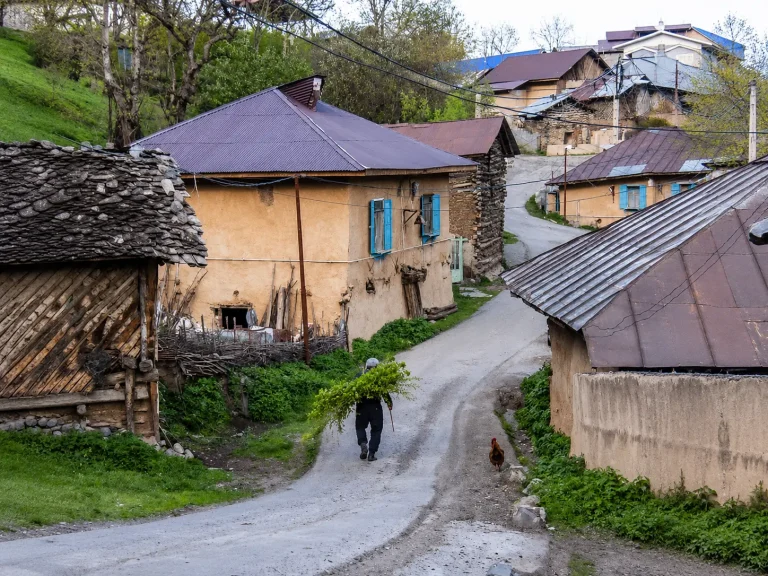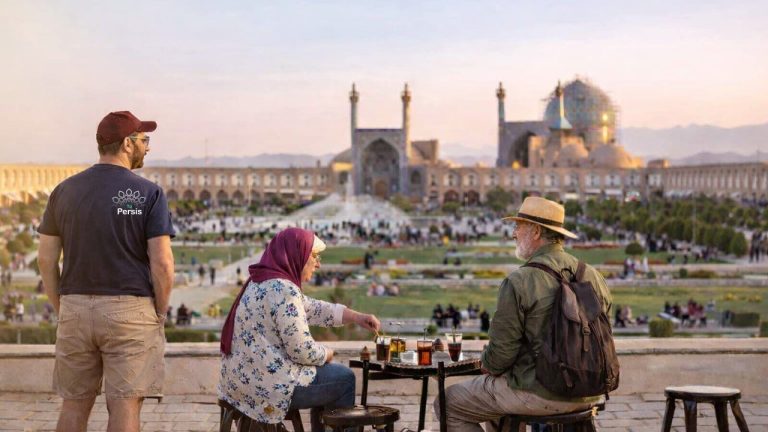
Traveling to any country becomes more enjoyable when you know its culture and unspoken rules. Iran is no exception. What many people abroad hear about Iran is often shaped by politics, and media but the truth on the ground is very different. Everyday life here is filled with hospitality, warmth, and countless small gestures of kindness. By learning a bit about Iran cultural etiquette, you not only show respect but also give yourself the chance to experience the country more deeply, through the eyes of its people.
Understanding Greetings and Social Connections
One of the first things you’ll notice in Iran is how people greet each other. Hospitality is at the core of society, and even a simple hello can open the door to conversations and friendships. The universal word is Salam or Dorood, a greeting that works anywhere—from a hotel lobby to a market stall.
Handshakes are common between men (or women), while interactions between men and women vary. Sometimes you may see handshakes, but often a smile, waving by one hand or placing a hand over the heart are warmest ways to greet without words. There’s no need to feel nervous—Iranians are understanding when it comes to visitors. They often appreciate the effort more than the form itself.
As you know, body language and hand gestures can have different meanings in different countries. For example, showing the ‘thumbs up 👍’ in Iran doesn’t always mean ‘like’ and might even get a surprised reaction. Instead, you can use the ‘👌’ gesture to say ‘perfect’.
The Spirit of Hospitality and Taarof
Perhaps nothing describes Iranian culture better than its hospitality. You may be offered tea in a shop, a meal in someone’s home, or even a ride when you least expect it. Much of this is tied to the tradition of Taarof, a ritual of politeness where people offer things even if they don’t expect you to accept right away.
At first, this might feel confusing—why offer something if it’s not meant literally? But once you get used to it, you realize it’s more about kindness and respect than about the item itself. As a traveler, it’s enough to smile, decline once or twice politely, and then accept if the offer continues. This dance of generosity is one of the things that makes Iran cultural etiquette so unique.
Dining Etiquette and the Joy of Food
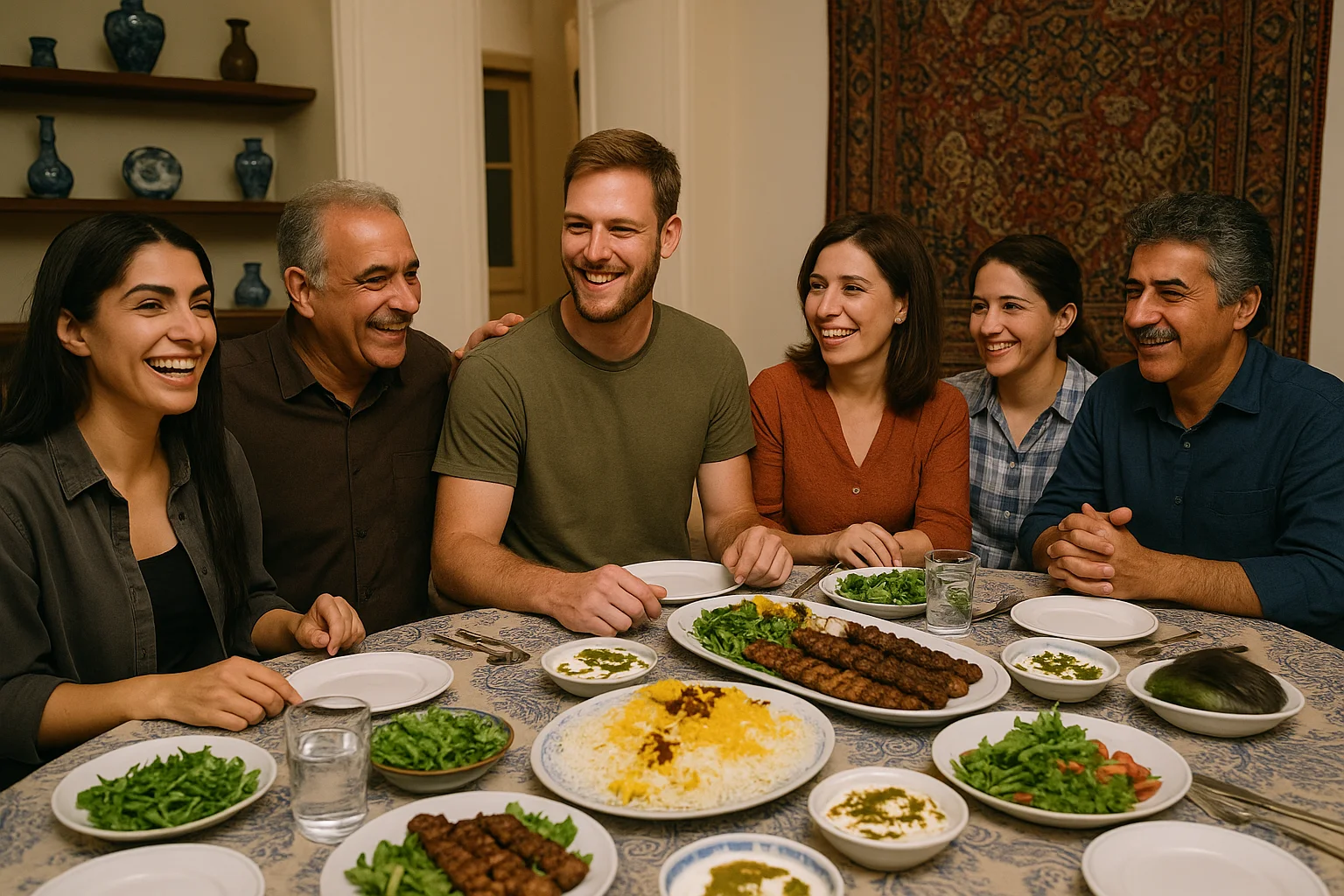
Food is the heartbeat of Iranian culture, and meals are rarely just about eating. They are about sharing time, laughter, and conversation. At family gatherings, dishes are placed in the center of the table, inviting everyone to share. Compliments are always welcome, and even a simple “Khoshmazeh bood”—meaning “It was delicious”—will bring smiles.
In more traditional homes, you might sit on carpets and eat with shoes left at the door. But don’t imagine this as restrictive; rather, think of it as an intimate cultural experience. Dining in Iran is relaxed and social, and often it feels more like being welcomed into a family than visiting a restaurant.
Another important point is Iranians’ dinner time. People in Iran usually have dinner between 7:00 PM and 11:00 PM. Most restaurants in Iran start serving dinner later than in many other countries. So, if you’re used to having dinner earlier than 7:00 PM, it’s better to make sure to arrange it in advance.
Shoes Off: A Sign of Respect in Iranian Homes
Another part of Iran cultural etiquette that travelers often notice is the tradition of removing shoes before entering a home. Almost every Iranian household is decorated with at least one Persian carpet, one of the country’s most valued handmade arts. Families care deeply for these carpets, not only because they are beautiful but also because they hold cultural and emotional value.
Cleanliness is also a major reason behind this custom. In many homes, and traditionally even today, meals are served on a cloth spread directly on the floor. Eating together in this way creates a cozy atmosphere, but it also makes keeping the floor spotless very important. For this reason, stepping onto the carpet with outdoor shoes would feel inappropriate.
When you visit an Iranian home, simply follow the local lead—if you see shoes left at the entrance, remove yours as well. The same custom is often followed in traditional guesthouses and homestays. In modern hotels, however, wearing shoes inside your room is generally acceptable.
Dress Code in Iran: Respect Without Rigidity
The question of dress is often the first thing travelers ask about, but it’s rarely as strict as outsiders imagine. Yes, modesty is expected, but within that framework there is room for personal style and color.
For women, a headscarf is part of the dress code, along with long sleeves and clothing that covers the hips. But scarves can be loosely draped, and bright, fashionable outfits are common. For men, long pants are the norm, while T-shirts are fine almost everywhere. What matters most is the gesture of respect. Visitors are not expected to blend perfectly, and Iranians are usually welcoming and relaxed when it comes to foreigners. Many travelers are surprised at how modern and stylish everyday fashion feels compared to what they imagined before arriving.
Respect in Public Spaces
Public behavior is another part of Iran cultural etiquette worth knowing. While private gatherings are lively and relaxed, public life tends to be more conservative. Couples usually avoid displays of affection in the street, but among friends, walking arm in arm—even among men—is a sign of closeness. Visiting mosques can be a highlight of your journey. Out of respect, women are often asked to wear a chador (a full-body covering) – but only in some mosques- provided at the entrance, while men should avoid shorts. Inside, the atmosphere is calm and reverent, and simply observing the rhythm of prayer can be a moving experience.
Photography and Everyday Encounters
Iran is a paradise for photographers, from the blue-tiled mosques of Isfahan to the desert landscapes of Yazd. Yet, it’s important to ask before photographing people, especially women. A friendly smile and a simple request go a long way.
Government buildings, military areas, and airports are off-limits for photography, but beyond that, locals often enjoy being part of your travel story. Many will even pose proudly once they see your interest.
Moving Around and Experiencing Daily Life
Transportation is another place where etiquette comes into play. On buses and metros, separate sections for men and women exist (in metros there are some shared sections also), and it’s polite to respect these arrangements. Taxis and ride-hailing apps like Snapp are easy to use and can become opportunities for small cultural exchanges with drivers eager to practice English or share local tips.
These everyday interactions, whether in a crowded bazaar or a quiet train ride, are where travelers often feel the warmth of Iranian culture most strongly.
Money and Tipping
Foreign credit cards mostly don’t work in Iran. It’s better to bring cash with yourself (usually Euros or USD) and exchange it for local currency (rial or toman).
Tipping is not obligatory but appreciated in restaurants, hotels, drivers and by guides.
A Final Thought
Traveling in Iran is not about memorizing rules—it’s about connecting with people and embracing their way of life. The customs, greetings, food traditions, and dress codes are not barriers but bridges, opening doors to a society that values respect, generosity, and human connection.
When you understand the basics of Iran cultural etiquette, you’ll find that what once seemed intimidating becomes second nature. More importantly, you’ll experience Iran not just as a destination, but as a living culture that welcomes you with open arms. And in the end, those moments of genuine connection—sharing tea, learning a new word, receiving a smile in return—are what will stay with you long after the trip ends.